SNORING
Snoring and alcohol
Why a glass of wine at dinner can mean a louder night, and how to find out how much it matters for you.
What alcohol does to your throat
The muscles of the throat keep the airway open while you sleep, even when they relax. Alcohol lowers their tone further, so the airway becomes narrower and floppier. It also dampens the reflexes that would normally wake you briefly when breathing becomes difficult. The result is more snoring, and in people prone to it, more and longer pauses in breathing.
Key study
Alcohol before bed in the sleep lab
- 7 adults
- Sleep lab
- With and without alcohol
Researchers recorded people's sleep on normal nights and then on a night when they drank alcohol just before bed. In the five with sleep apnea, alcohol made breathing pauses longer and more frequent and oxygen levels fell further in the first hour of sleep. In the two with simple snoring, alcohol brought on obstructive sleep apnea during the first hour.
Issa & Sullivan · J Neurol Neurosurg Psychiatry · 1982 Source 1
The effect is strongest while alcohol is in your blood, which is why snoring is often worst early in the night after an evening drink. Larger studies of whole populations point the same way: across 21 studies, higher alcohol intake was linked with a 25% higher risk of sleep apnea 2.
How to drink and snore less
Practical steps
- Stop earlier. Leave a few hours between your last drink and bedtime, so less alcohol is in your blood when you fall asleep.
- Drink less on the nights that matter, for example when you share a room.
- Avoid mixing alcohol with sleeping pills or sedatives, which relax the throat in the same way. Never stop a prescribed medicine without talking to your doctor.
- Sleep on your side after drinking. Alcohol and lying on your back add up. See side sleeping.
- Test it. Compare nights with and without alcohol over a couple of weeks.
Find out how much it matters for you
Everyone reacts differently. Some people snore much louder after a single glass, others hardly notice. The only way to know is to compare your own nights. Testing a remedy explains a simple method.
Why do I snore only when I drink?
Alcohol relaxes your throat muscles more than normal sleep does. If your airway is just open enough on sober nights, the extra relaxation can be enough to make it vibrate 1.
How long before bed should I stop drinking to avoid snoring?
There is no exact rule, but the effect is strongest while alcohol is in your blood. Stopping a few hours before bed, and drinking less, helps many people. Try it and compare your nights.
Does alcohol cause sleep apnea?
Alcohol can bring on pauses in breathing in people who normally only snore 1, and higher alcohol intake is linked with a higher risk of sleep apnea 2. If you have sleep apnea, ask your doctor about alcohol.
Do beer and wine affect snoring differently?
What matters is the amount of alcohol, not the drink. A large glass of wine and a pint of strong beer contain similar amounts.
Sources
- Issa FG, Sullivan CE. Alcohol, snoring and sleep apnea. J Neurol Neurosurg Psychiatry. 1982;45(4):353-359. doi.org/10.1136/jnnp.45.4.353
- Simou E, Britton J, Leonardi-Bee J. Alcohol and the risk of sleep apnoea: a systematic review and meta-analysis. Sleep Med. 2018;42:38-46. doi.org/10.1016/j.sleep.2017.12.005
COMING SOON
Find out
how you snore.
Snores listens through the night on your iPhone and shows you in the morning how much and how loudly you snored, with clips of the loudest moments. Tag what you tried and see what goes with quieter nights. The sound stays on your iPhone.
Meet Snores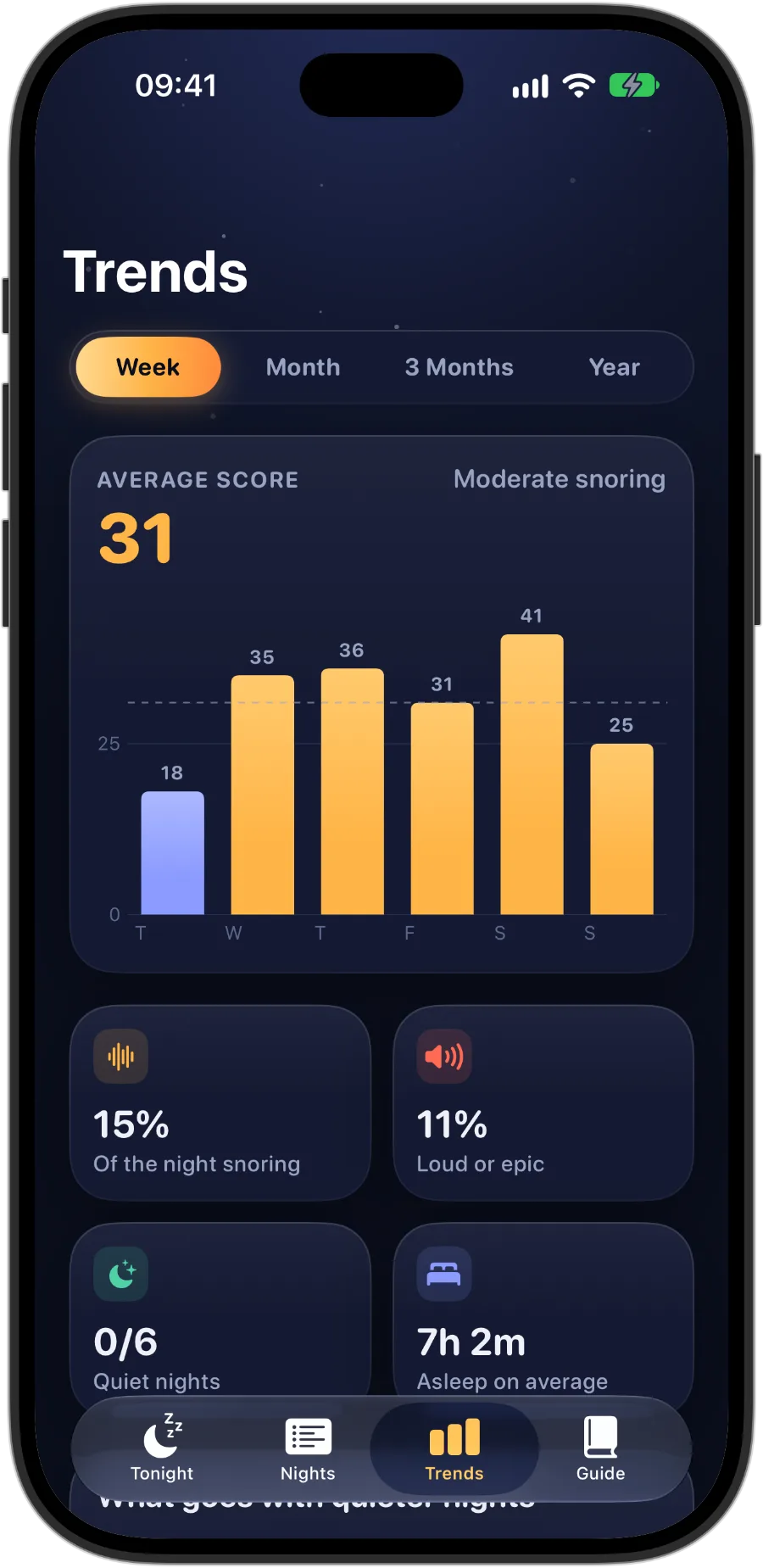
This page is general information, not medical advice. Snores is not a medical device and does not diagnose sleep apnea or any other condition. If you are worried about your sleep or your breathing, talk to a doctor.