
REMEDIES
A blocked nose and allergies
When the nose is the problem: rinses, sprays, strips and a bedroom that's kinder to allergies.
Why a blocked nose leads to snoring
When the nose is blocked, you need to breathe in harder, which pulls the soft walls of the throat inwards, and you are more likely to breathe through your mouth, which lets the jaw and tongue fall back. Both make the airway narrower and more likely to vibrate. In a study of almost 5,000 adults, people with frequent night-time nasal symptoms were more likely to snore habitually 1.
What helps
| Option | What it does | Good to know |
|---|---|---|
| Saline spray or rinse | Washes out mucus and allergens | Safe to use every day |
| Steroid nasal spray | Calms inflammation from allergies | Takes days to work; improved congestion and sleep in a trial 2 |
| Antihistamines | Reduce allergy symptoms | Some cause drowsiness; ask a pharmacist |
| Nasal strips or dilators | Hold the nostrils open | Help some snorers with a narrow nose 3 |
| Decongestant spray | Shrinks swollen lining quickly | Only for a few days at a time |
Key study
Nasal steroids, congestion and sleep
- 20 adults
- Allergic rhinitis
- Placebo-controlled
People with allergic rhinitis used a nasal corticosteroid spray or a placebo, and kept a daily diary of their nose, sleep and daytime sleepiness. Congestion and sleep improved significantly with the steroid spray but not with the placebo; daytime sleepiness improved too, but not significantly.
An allergy-friendlier bedroom
- Wash bedding weekly in hot water, and use dust-mite covers on pillows and mattress.
- Keep pets out of the bedroom.
- Shower before bed in pollen season, and keep windows closed on high-pollen nights.
- Keep the bedroom dust-free, and consider a humidifier if the air is very dry.
Can allergies cause snoring?
Yes. Allergy-related nasal congestion is linked with habitual snoring and with sleep-disordered breathing 1.
Why do I snore more with a cold?
A cold blocks the nose, so you breathe harder and through your mouth. The snoring usually settles when the cold does.
Do nasal sprays help snoring?
Steroid sprays can help when allergies are the cause 2. Saline is safe every day. Decongestant sprays only for a few days.
Does a humidifier help snoring?
It may ease a dry, irritated nose and throat, which some people find helps. There is little research on snoring itself.
Sources
- Young T, Finn L, Kim H. Nasal obstruction as a risk factor for sleep-disordered breathing. J Allergy Clin Immunol. 1997;99(2):S757-S762. doi.org/10.1016/S0091-6749(97)70124-6
- Craig TJ, Teets S, Lehman EB, Chinchilli VM, Zwillich C. Nasal congestion secondary to allergic rhinitis as a cause of sleep disturbance and daytime fatigue and the response to topical nasal corticosteroids. J Allergy Clin Immunol. 1998;101(5):633-637. doi.org/10.1016/S0091-6749(98)70171-X
- Löth S, Petruson B. Improved nasal breathing reduces snoring and morning tiredness: a 6-month follow-up study. Arch Otolaryngol Head Neck Surg. 1996;122(12):1337-1340. doi.org/10.1001/archotol.1996.01890240045010
COMING SOON
Find out
how you snore.
Snores listens through the night on your iPhone and shows you in the morning how much and how loudly you snored, with clips of the loudest moments. Tag what you tried and see what goes with quieter nights. The sound stays on your iPhone.
Meet Snores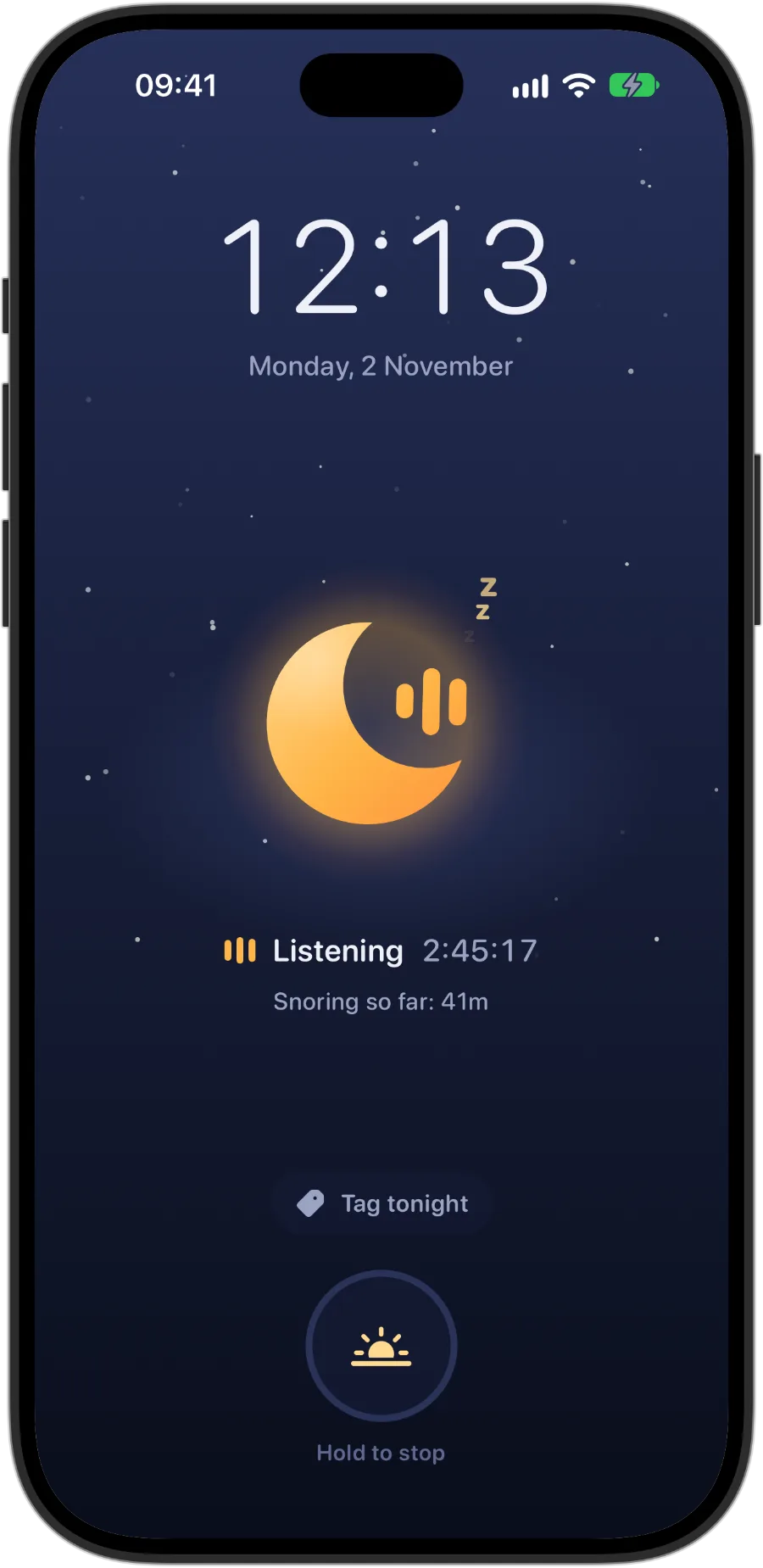
This page is general information, not medical advice. Snores is not a medical device and does not diagnose sleep apnea or any other condition. If you are worried about your sleep or your breathing, talk to a doctor.