REMEDIES
Raising the head of the bed
A small tilt for back sleepers who can't stay on their side.
- Best for
- Back sleepers who can't stay on their side
- Evidence
- Weak to moderate, mostly in sleep apnea
- Cost
- Free to moderate
- Time to work
- The first night
How it helps
Tilting the upper body slightly reduces the effect of gravity on the tongue and soft palate, so they fall back less, and it may reduce swelling in the airway. It also helps some people with reflux, which can irritate the throat at night.
Key study
A slight tilt in the sleep lab
- 52 adults
- Sleep apnea
- 7.5 degrees
People with sleep apnea slept a night in the lab flat and a night with the head of the bed raised by 7.5 degrees. With the tilt, their apnea-hypopnea index fell from a median of 15.7 to 10.7 an hour and their lowest oxygen levels improved, without changing how they slept. In a few who slept flat again, the index went back to where it was.
How to do it
Practical steps
- Raise the bed itself, with blocks under the legs at the head end or an adjustable base, so your whole upper body tilts.
- Or use a wedge pillow that supports your back and shoulders, not only your head.
- Avoid piling up pillows, which bends the neck forward and can make the airway narrower and your neck sore.
- Combine it with side sleeping if you can: a tilt and a side position work on the same problem.
Does sleeping propped up stop snoring?
It may reduce snoring in back sleepers, and a slight tilt reduced breathing pauses in people with sleep apnea 1. Raise your upper body, not just your head.
Do anti-snore pillows work?
Pillows that keep you on your side or support a gentle tilt may help some people. There is little research on specific products.
How high should I raise my bed?
In the study, 7.5 degrees was enough 1. Start there and see how you sleep.
Is a wedge pillow good for snoring?
It can be, if it lifts your shoulders and back as well as your head.
Sources
- Souza FJFB, Genta PR, de Souza Filho AJ, Wellman A, Lorenzi-Filho G. The influence of head-of-bed elevation in patients with obstructive sleep apnea. Sleep Breath. 2017;21(4):815-820. doi.org/10.1007/s11325-017-1524-3
COMING SOON
Find out
how you snore.
Snores listens through the night on your iPhone and shows you in the morning how much and how loudly you snored, with clips of the loudest moments. Tag what you tried and see what goes with quieter nights. The sound stays on your iPhone.
Meet Snores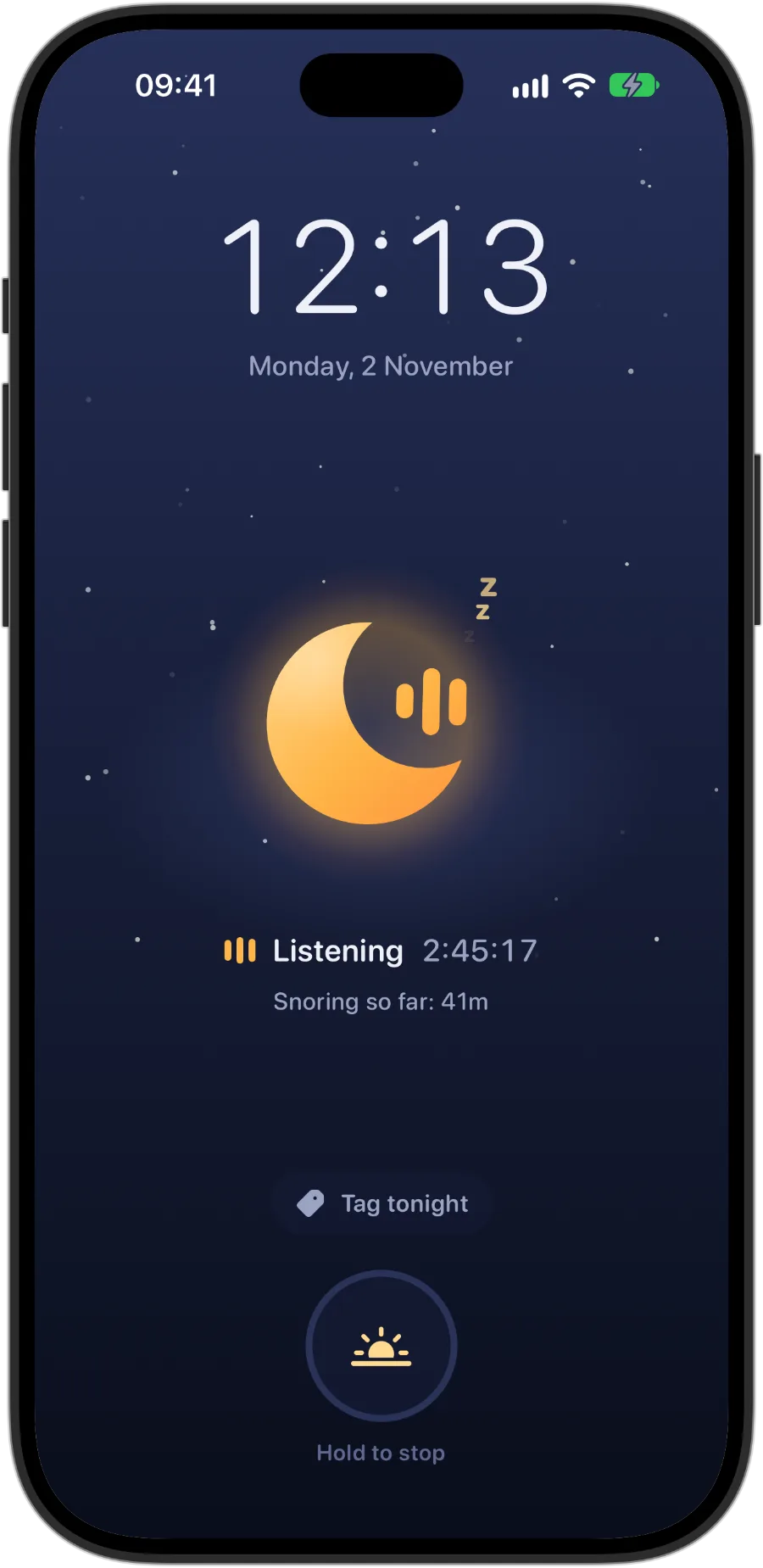
This page is general information, not medical advice. Snores is not a medical device and does not diagnose sleep apnea or any other condition. If you are worried about your sleep or your breathing, talk to a doctor.